On Intersectionality

A Brief Note about the 6888th:

Before we move onto other ways that women contributed to war efforts throughout the centuries, I’d like to briefly highlight the issue of intersectionality, a concept introduced by Kimberle Crenshaw in the late 1980s. The basic idea is that “when it comes to thinking about how inequalities persist, categories like gender, race, and class are best understood as overlapping and mutually constitutive rather than isolated and distinct.” 
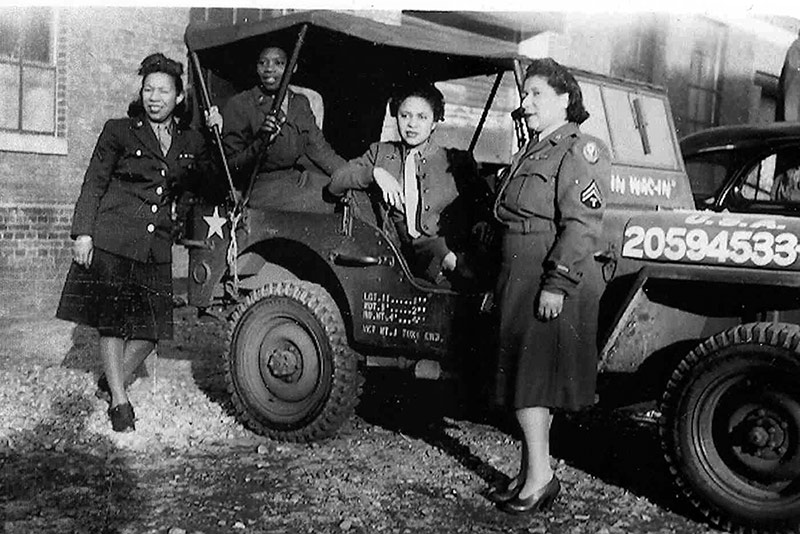
Four members of the 6888th Postal Battalion in Europe with an Army Jeep.
Members of the 6888th Postal Battalion in Europe.
Source: United States Department of Defense, reposted at the U.S. Army Center of Military History.

In her memoir, One Woman’s Army: A Black Officer Remembers the WAC, Charity Adams Early highlights the extra burdens that faced African American Women in the military – primarily the problems associated with racism and segregation. Yet, this woman showed an amazing amount of grit and ended up leading the 6888th Central Postal Directory Battalion. The battalion of African American WACS were first stationed in Birmingham, England, and later in France with one mission – get the mail to our boys at the front. According to the US Army Center of Military History, the women created a new tracking system, processed an average of 65,000 pieces of mail per shift, and cleared a six-moth backlog of mail in three months. 

Stories of Racism

Just to whet your appetite for more stories of the Six Triple Eight, I want to share this snippet from an article from the National World War II Museum entitled “The Six Triple Eight: No Mail, Low Morale” (February 10, 2021).

Imagine you’re a black woman leading a black platoon – the only platoon of African American women to be sent overseas. You’re in England and a visiting general decides he wants to see the women under your command march. What do you do when this general gets on his high horse with you? Do you stand your ground? Adams did. Read the following excerpt from “No Mail, Low Morale:”

It seemed like every weekend her troops were marching for one general or another. On this one occasion, a general arrived, but only 300 of her women were ready for inspection. The general wanted to know where the rest of the women were. Adams explained that one-third were on duty and the other third were resting. The general did not find that answer satisfactory. ‘I tell you what I’m going to do, Major Adams. I’m going to send a white first lieutenant down here to show you how to run things.’

Adams recalled that ‘there are times when the human mind must respond like a computer. That statement seemed like a scream.’ She did not remember which word triggered her response, but she was certain that her officers and soldiers in formation had heard the exchange. Adams realized that she might not be able to effectively lead her troops if she did not give the proper response, so she blurted out, ‘Over my dead body, Sir.’

The general assured her that she would hear from him. As she prepared for a court-martial, her staff found a memorandum from SHAEF headquarters that cautioned commanders about using language that stressed racial segregation. The general relented.

— James William Theres (2021, February 10)

And that, my friends, takes grit.

I am going to come back to these amazing women later in this blog after I have organized my thoughts a bit more. For those of you who want to know more about the Six Triple Eight, I recommend this article from the National World War II Museum (dated September 15, 2021). 

Sources

Earley, C. A. (2021). One Woman’s Army: A Black Officer Remembers the WAC (Texas A & M University Military History Series, #12) [Kindle Android version]. Texas A&M University Press.

Theres, James William. (2021, February 10). The SixTripleEight: No Mail, No Morale. The National WWII Museum. Last accessed October 6, 2021. https://www.nationalww2museum.org/war/articles/the-sixtripleeight-6888th-battalion

File Under

,

Tagged

Upcoming Entries: Women’s war contributions that pre-date World War II
The Housewife

The Housewife:

Our second story is not about a countess, but rather a British housewife.

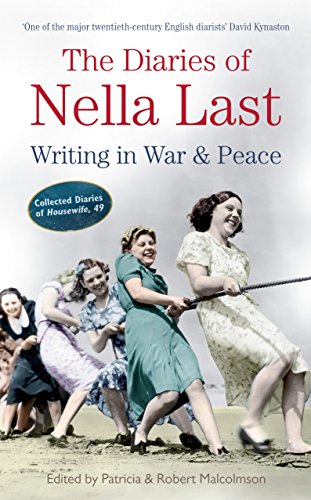
Book Cover: The Diaries of Nella Last: Writing in War and Peace.

Meet Nella Last. Nella was a diarist for Mass Observation, a social research organization launched in January 1937. Billed as the “anthropology of ourselves,” Mass Observation had a national panel of volunteers who replied to regular questionnaires on a variety of questions. Approximately 480 of these diaries were written during World War II. Nella’s diary has been much studied, with scholars releasing four volumes of her writings. In addition, her diaries were the basis of Housewife, 49, a British movie released in 2006. 

Reading Nella’s diaries, one can see how her life grew to embrace the war effort. The mother of two grown sons, her life had been rather limited by her husband’s cranky personality. However, once she joined the Women’s Voluntary Services, things changed for her. Now, the WVS was an organization that was originally focused on training women to help with air raid precautions in the lead up to World War II. By the end of the war, this organization was running emergency rest centers, feeding people and administering first aid, and assisting with the evacuation and billeting of children. According the BBC, one in every 10 British women was a member of this organization, the so-called “army Hitler forgot.”

Nella’s work in her community of Barrow-in-Furness included organising raffles to raise money, working for Central Hospital Supply Service and providing ‘comforts’ and other goods for the Sailors’ Home. She worked on both the “Jolly Roger,” a mobile canteen, and later in a stationary canteen. As the war progresses, she helps set up a Red Cross shop in Barrow, the proceeds from which were intended to raise money for its Prisoner of War Fund. She does all this even though she is tired and scared, even though she has to stand in line waiting for rationed food, even though she’s sick of having a bomb shelter in her living room. 

According to the editors of The Diaries of Nella Last: Writing in War and Peace (2012), her war work “[G]ave her a sense of purpose; it helped her to feel worthwhile – and to be acknowledged by others. It had been a sort of anchor; it liberated her from the constraints of domesticity –‘the cage of household duties alone’, as she once put it (15 August 1945). In many ways the war changed her life.” Nella, writing in March 1943, writes: ‘My job – or rather jobs – are all volunteering but I love them and the Red Cross shop is a great pleasure to me even if a great deal of work. I don’t feel I could ever settle down entirely to be a housewife again.’

Nella is another example of perseverance and grit. 

Source: Last, Nella. (2012). The Diaries of Nella LastWriting in War and Peace. Malcolmson, P., & Malcolmson, R., Editors. [Kindle Android version]. Profile Books.

See also: The BBC’s archived page about Nella’s diary. I’m not sure how long this will still be available.

File Under

Tags:

The Countess

The Countess

Let me begin this blog with the stories of two women, both British – one a countess, the other a housewife. Today’s story is about our Countess, a woman who managed to fluster the British military during World War II in an effort to serve her country while spending time with her new husband. Our countess is Hermoine Ranfurly nee Llewellyn who had moved to Australia at the age of 24 to become the personal assistant of the Governor of New South Wales. While in Australia, she met Daniel Knox, the 6th Earl of Ranfurly, and subsequently married him. When World War II broke out, her husband’s Yeomanry unit, the Notts Sherwood Rangers (part of the 1st Cavalry Division, later the 10th Armoured Division) was shipped to the middle-east. Hermoine wants to do her part, finding a job in London where her boss was – in her words – “too fast for me in every respect.” 

Desperate to be near her husband, she goes to a small travel agency and books herself a one-way passage to Egypt, in her attempt to get to Palestine. She lands a job as a secretary to the head of the regional Red Crescent in Haifa, but despite her best efforts, Brigadier Brunskill of the General Headquarters in Jerusalem says she cannot stay. To quote her diary: ‘You will go,’ he said, ‘on the first evacuation ship, very soon. You may stay in South Africa or proceed to England. You can’t expect me to believe that a Countess can type.’

By the end of September, our Hermoine finds herself with the other illegal wives, under military guard, on the S.S. Empress of Britain. Don’t worry, though: She slips off the ship in South Africa, writing in her journal on October 11, 1940: “I am going back to Dan.” She walks into a passport office in South Africa, obtains a 3-month visa for Egypt, secures a small loan from a bank, and gets on a flying boat back to Cairo, where – having spent the last of her money – shows up a friend’s house where she cannot pay the taxi driver. In her October 31 entry, Hermoine reports: 

Today Pam returned from GHQ to lunch in the flat. She was loaded with news: ‘Dan is coming with his General to Cairo tomorrow for two nights; the news of your return is out at GHQ and there is much gossip– some think it very funny but the authorities concerned are furious and suspect you must have used someone else’s passport as such care had been taken that you should not return. They are determined to ‘‘ make an example’’ of you and throw you out again. My girlfriend in the Provost Marshal’s office says the Military Police have been told to find you.

Hermoine, however, is incredibly resourceful. She finds a job working for the SOE in Cairo, and even then the military wants her deported. The Ambassador refuses to pull her passport, saying: ‘As you do not appear to be a white slave trafficker or involved with drugs, I cannot remove your passport.’ The Brits still want to send her home, appealing to General Jumbo Wilson. As her husband has been taken a prisoner of war, they were no longer in the same theatre of war, making the original order moot. At this point, Wilson adds: ‘This lady has outmanoeuvred every General in the Middle East and I do not myself intend to enter the arena.’

By November of 1942, General Jumbo – as she calls him in her diary – has taken Hermoine on as his own secretary. Her posts take her from Cairo to Algiers to Caserta (Italy). In late November 1944, her General is notified that he will be transferred to Washington, DC as the head of the British Joint Staff Mission. At first Hermoine is to go along to America, but the General’s wife objects and she is left behind in England. But, does this stop Hermoine from serving her country? No. She gets herself to back to Italy and secures a job with Air Marshal Slessor, continuing in this position after Slessor is moved to London towards the end of the war. 

Now, that’s grit.

Source: Ranfurly, H. (2014). To War with Whitaker: Wartime Diaries of the Countess of Ranfurly, 1939-45. [Kindle Android version]. Bello. [Primary Source: Diary] 

Tagged:

File Under:

This is a Man’s War?

Let’s talk about the Gutsy Women of World War II! I’m back with resources, lecture notes, reading annotations, and all the other materials you need to build your own class about the role of women in WWII. — MT Hallock Morris

Video: It’s Your War, Too! Produced by the US Army Signal Corps and distributed under the auspices of The War Activities Committee of the Motion Picture Industry. Available on YouTube courtesy of The Best Film Archives.

The Gutsy Women of World War II

During the 2022 Spring Semester, I taught a nifty Honors Seminar entitled The Gutsy Women of World War II. This class was an outgrowth of the research I had conducted for a talk at the Albert H. Small Normandy Institute. [You can read the backstory here!] Although I am an associate professor of Political Science, I am a huge proponent of interdisciplinary research. Why stay in our individual academic silos when there is so much to learn out there? My research has since expanded to include other gutsy women – suffragettes, female politicians, and environmental activists. All of these women have a story, with a common theme: Grit. More specifically, they persisted when the odds were against them. 

What you are seeing here is a hodgepodge of ideas. You’ll see links to the sources I used to develop my course, annotations and summaries of readings about gutsy women, and my thoughts as they have continued to develop. My goal is to share what I found, to help support others as they delve into teaching the stories of these women. 

The Seminar: A Basic Description

If you’re a high school teacher, a college professor, a homeschooling parent, a student looking for information to write a paper, well, you probably want to know what I taught in this course. Here are a few excerpts from my course syllabus:

The Course Description

Land Girls, Leaders, Soldiers, Spies: The Gutsy Women of World War II. What did you do during the war, Grandma? From simple things such as rationing and planting victory gardens to serving as WACs and Marines, from being a nurse on the beach at Normandy to serving donuts behind enemy lines, from working as a “Rosie” to spying behind enemy lines, women played an essential role in helping the Allies win the war. Our focus will be on issues of gender, intersectionality, and leadership, as well as the “Grit and Guts” it took to survive the darker aspects of war – surviving the Holocaust, hiding Jewish children in convents, and flying night raids over the enemy. As a part of our work, you will learn how to use USI’s archival resources to help build a popular history podcast on the Gutsy Women of World War II. 

Note: This course was offered as a 1-hour honors seminar at the 100-level. The course met in person one day a week for 50 minutes. We had two weeks where the meeting was online (I was at a conference one week, I was out with COVID symptoms the second time). We also had one day that was cancelled due to inclement weather. We had a speaker during one class session who talked about the practicalities of developing a podcast and/or radio documentary. We also had one class period where we toured the University’s archives and special collections.

Honors Program Student Learning Outcomes

Connections among Disciplines. Students will demonstrate an understanding of interdisciplinary inquiry into complex problems.

Research and Creative Skills. Students will demonstrate the skills necessary to do independent research or creative projects and present their work to faculty and peers.

Community Engagement. Students will demonstrate leadership and active membership in various communities, including the Honors Program, USI, and the Evansville community.

Ethics and Morals of Citizenship. Students will demonstrate an understanding of the ethical and moral obligations of being an informed and engaged citizen in a diverse and global community.

Course Learning Objectives

Students will demonstrate understanding of the role of women in World War II from the perspectives of political science, history, and women’s studies.

Students will demonstrate strengthened skills important to success in Honors and undergraduate education, including reading skills, critical and creative thinking skills, and communication skills (written and oral) by using both primary and secondary materials to develop script materials for popular history podcast.

Students will demonstrate understanding of the impact of the topic on current global issues by examining the historical issues of intersectionality and exploring the roots of modern societal expectations of women.

The Textbook & Other Materials

Yellin, Emily. Our Mothers’ War: American Women at Home and at the Front During World War II. New York: Free Press, 2005. 

Note: This is an older book and it didn’t cover all of the topics I wanted to cover in the class. I augmented the book with various articles and videos that I linked through our course website. Furthermore, because one of the goals of the class was to look at Evansville’s (IN) contributions to the war effort, I also had two public history books on reserve at the campus library. These were:

MacLeod, James Lachlan. 2015. Evansville in World War II. Charleston, SC: History Press

Bingham, Darrel. 2005. Evansville: The World War II Years. Charleston, SC: Arcadia

Our Weekly Topics

Week 1. Precursors
Week 2. Unearthing Our Mothers’ War Years
Week 3. Soldiers Without Guns – The Rosies
Week 4. Putting Up a Good Front – Entertainers, Fictional Characters, & Icons
Week 5. This Man’s Army, Part I – WAC, WAVES, SPARS, WASPS, and Marines
Week 6. Save His Life and Find Your Own – Volunteers, Land Army, Red Cross Girls, and Nurses
Week 7. Jane Crow and Questions of Loyalty – African American and Japanese American Women
Week 8. More on Intersectionality – Mexican American Women War Workers
Week 9. British Women on the Homefront – Victory Gardens, Jambusters, and Make Do and Mend
Week 10. British Spies, American Spies
Week 11. France, Belgium, and the Philippines – Resistance Efforts and Freedom Lines
Week 12. The USSR – Night Witches and Snipers
Week 13. Bad Girls – Red Light Districts, Social Mores, and Sexuality
Week 14. Victims and Survival – Comfort Women, Rape, and the Holocaust
Week 15. The Aftermath – Backlash, the Roots of Feminism, and Iconic Visions

Note: I issued a trigger warning for Week 14 because these can be uncomfortable topics. Here is what I stated:

This discussion may be uncomfortable for some students. Descriptions of the rape of Nanking, the forced prostitution of Korean women, and the treatment of women in concentration camps may be graphic. Please see me if you need an accommodation for this week.”

— HONS 129.H04 Syllabus | Spring 2022, University of Southern Indiana

About Week 13: I’m a college professor and my class was filled with individuals who were 18+. I’m also pretty open when it comes to talking about sex because I feel that honesty is the best policy. However, I am also married to a high school social studies teacher — and he has adamantly stated that he would never cover these topics in class. I suspect that your comfort level with these issues depends on where you live and teach in the USA.

So What’s Next?

Stay tuned. We’re going to start our journey with the tale of a countess and a housewife, followed by a short story about the 6888th Postal Battalion. Next week, you’ll be introduced to the women warriors of years past and to the Hello Girls. If you’ve been here before, these are reposts from last fall. All new material starts next Wednesday!

Tagged:

File Under:

,

Dated: