A Brief Note about the 6888th:
Before we move onto other ways that women contributed to war efforts throughout the centuries, I’d like to briefly highlight the issue of intersectionality, a concept introduced by Kimberle Crenshaw in the late 1980s. The basic idea is that “when it comes to thinking about how inequalities persist, categories like gender, race, and class are best understood as overlapping and mutually constitutive rather than isolated and distinct.”
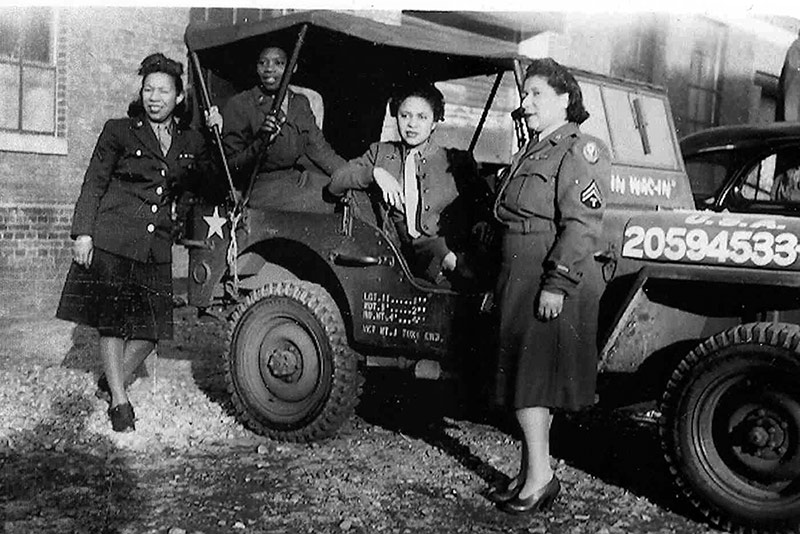
Source: United States Department of Defense, reposted at the U.S. Army Center of Military History.
In her memoir, One Woman’s Army: A Black Officer Remembers the WAC, Charity Adams Early highlights the extra burdens that faced African American Women in the military – primarily the problems associated with racism and segregation. Yet, this woman showed an amazing amount of grit and ended up leading the 6888th Central Postal Directory Battalion. The battalion of African American WACS were first stationed in Birmingham, England, and later in France with one mission – get the mail to our boys at the front. According to the US Army Center of Military History, the women created a new tracking system, processed an average of 65,000 pieces of mail per shift, and cleared a six-moth backlog of mail in three months.
Stories of Racism
Just to whet your appetite for more stories of the Six Triple Eight, I want to share this snippet from an article from the National World War II Museum entitled “The Six Triple Eight: No Mail, Low Morale” (February 10, 2021).
Imagine you’re a black woman leading a black platoon – the only platoon of African American women to be sent overseas. You’re in England and a visiting general decides he wants to see the women under your command march. What do you do when this general gets on his high horse with you? Do you stand your ground? Adams did. Read the following excerpt from “No Mail, Low Morale:”
It seemed like every weekend her troops were marching for one general or another. On this one occasion, a general arrived, but only 300 of her women were ready for inspection. The general wanted to know where the rest of the women were. Adams explained that one-third were on duty and the other third were resting. The general did not find that answer satisfactory. ‘I tell you what I’m going to do, Major Adams. I’m going to send a white first lieutenant down here to show you how to run things.’
Adams recalled that ‘there are times when the human mind must respond like a computer. That statement seemed like a scream.’ She did not remember which word triggered her response, but she was certain that her officers and soldiers in formation had heard the exchange. Adams realized that she might not be able to effectively lead her troops if she did not give the proper response, so she blurted out, ‘Over my dead body, Sir.’
The general assured her that she would hear from him. As she prepared for a court-martial, her staff found a memorandum from SHAEF headquarters that cautioned commanders about using language that stressed racial segregation. The general relented.
— James William Theres (2021, February 10)
And that, my friends, takes grit.
I am going to come back to these amazing women later in this blog after I have organized my thoughts a bit more. For those of you who want to know more about the Six Triple Eight, I recommend this article from the National World War II Museum (dated September 15, 2021).
Sources
Earley, C. A. (2021). One Woman’s Army: A Black Officer Remembers the WAC (Texas A & M University Military History Series, #12) [Kindle Android version]. Texas A&M University Press.
Theres, James William. (2021, February 10). The SixTripleEight: No Mail, No Morale. The National WWII Museum. Last accessed October 6, 2021. https://www.nationalww2museum.org/war/articles/the-sixtripleeight-6888th-battalion
File Under
Tagged
Upcoming Entries: Women’s war contributions that pre-date World War II
 Grit, Guts, and Glass Ceilings